As a creative writer specializing in Fiction for my master’s degree, my colleagues were often surprised when they discovered I’d chosen to take a class focusing on UX Design. I was often asked why I would use precious thesis credits for a pursuit that doesn’t directly relate to my over-arching goals as a fiction writer. However, I believe that being an effective writer isn’t just about telling a good story–it’s about considering the audience you’re writing to. My study of UX design has helped me center projects both personal and professional around those that will be receiving them.
In this class, I had the opportunity to work on a collaborative project with the goal of attracting more students to USU’s MTC and TCR graduate programs. My teammates Lydia Velasquez, Rhoda Oladosu, and I spent 12 weeks to create a blog that would inform users of the programs’ versatility and value while highlighting the community within the program.
Below, I’ll walk you through this project, my individual contributions, and how I better learned to consider my audience through each step.
Introduction
The first step in our journey was to gather information that would provide insight into what prospective students might need out of the graduate-level MTC and TCR programs at Utah State. To accomplish this, I worked with my teammates to formulate survey questions to help us get an accurate picture of why students might be hesitant to apply.
I suggested we formulate a survey to undergraduate students actively in the university’s TCR program to supplement interview data we would receive from other current Master’s students. My reasoning for this population choice was that the best feedback we could receive would be from those who have not already elected to pursue a Master’s degree. I was hopeful that we might receive valuable data from students that were resistant to pursue a degree because current graduate students already understood the value of the program. In order to ensure we’d get the clearest picture of the real concerns of students, we worked together to create open-ended questions that allowed the respondents to give honest feedback.
Research Results
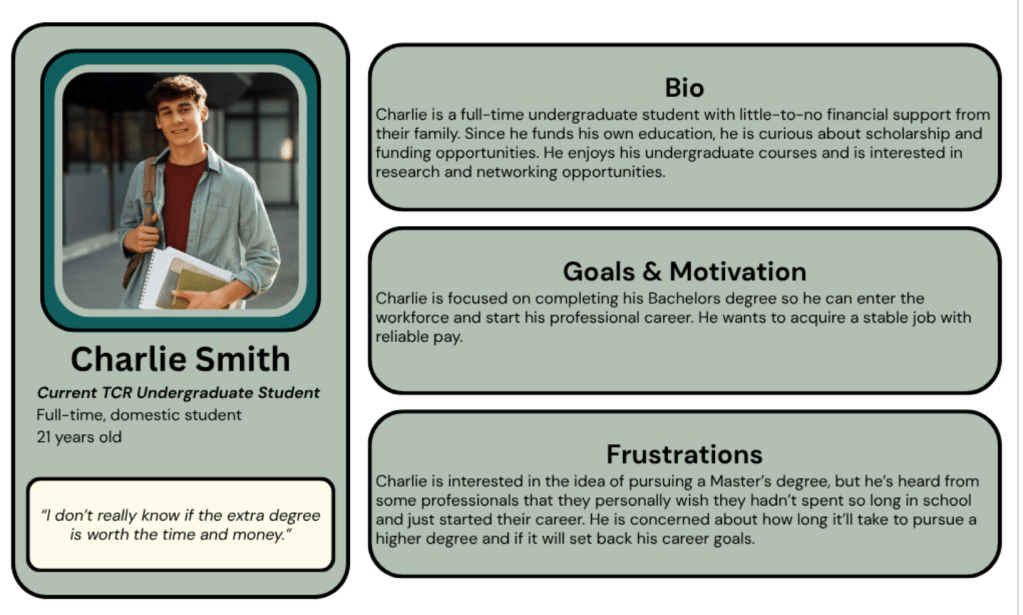
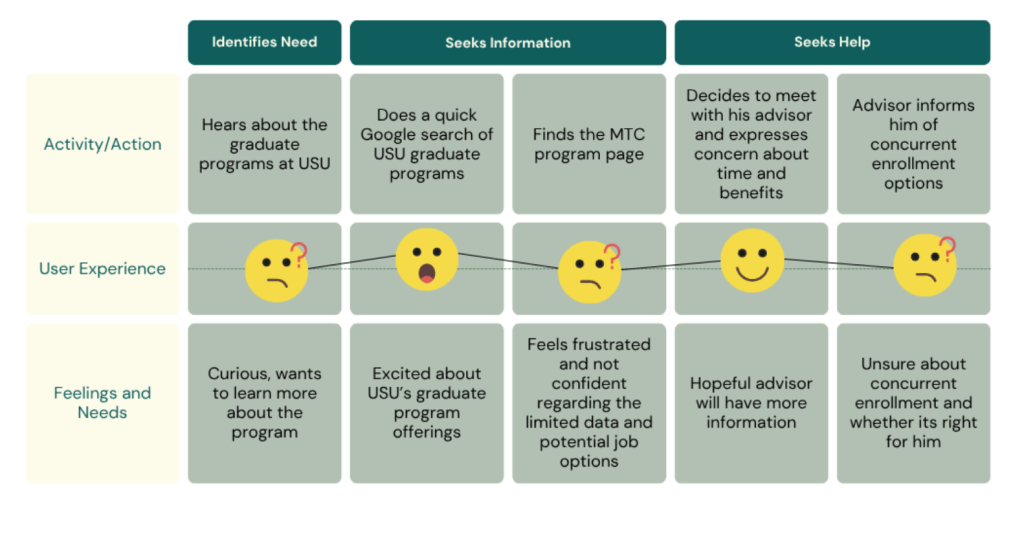
As I’d hoped, our research indicated prospective students were hesitant to apply to the program because they were unsure if the investment in the program would be worth the time and effort professionally. As highlighted in the above user persona’s frustrations, a particular area of interest to me from this feedback was that some students had heard others mention they’d personally wished they hadn’t spent so long in school and rather had just started their career.
I knew that whatever solution we created, we needed to find a way to showcase the value alumni had found in pursuing this degree so that prospective applicants may have a counter-viewpoint to consider in this crucial investment of time and money. From my perspective, there are few stronger means of persuasion outside of personal experience. This is when I pitched the idea of a blog to my teammates to provide us with the opportunity to include individual voices for prospective students to consider. The blog would also help ease the frustrations brought to the table from the current master’s student interviews by providing a central place to find all the information they’d need to apply.
Bringing it all Together
Creating an idea for a solution wasn’t enough. We needed to bring our ideas to life. To do so, we prioritized the feedback we’d received from the survey and the interviews into various prototypes. As you’ll be able to see in the prototypes below, my priorities remained focused on the concerns of the undergraduate students.
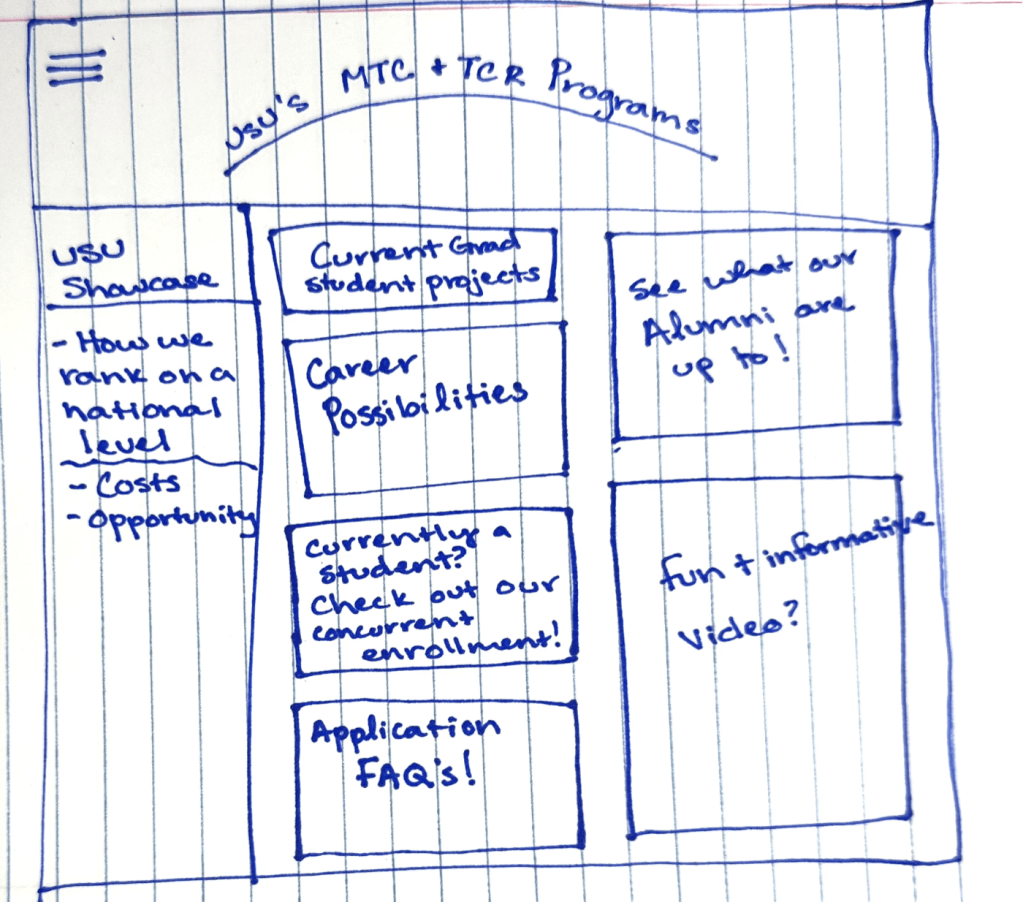
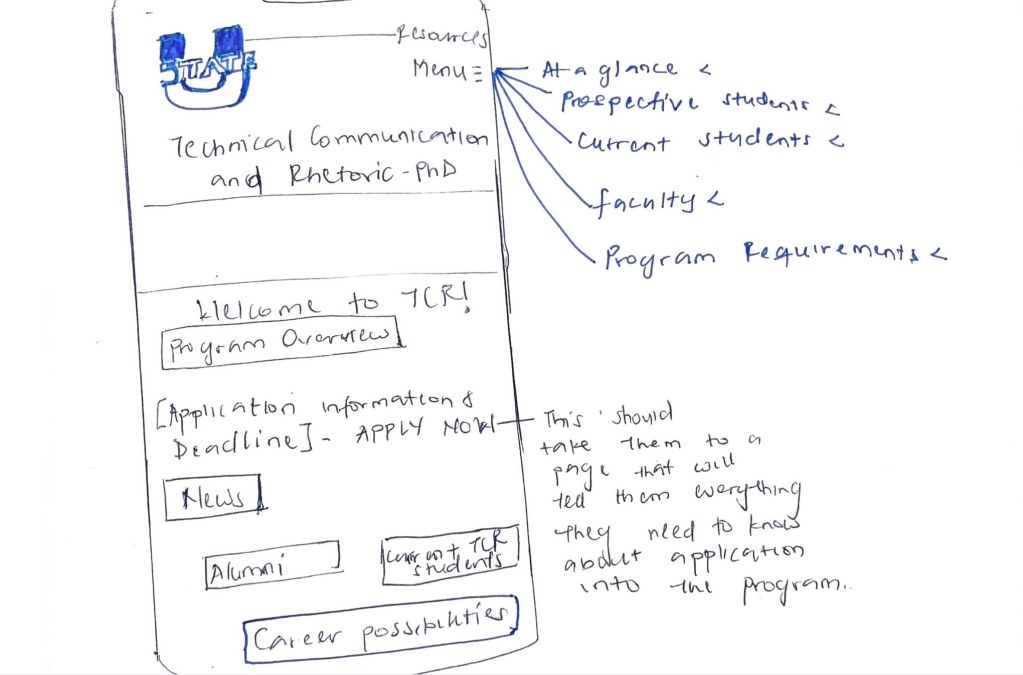
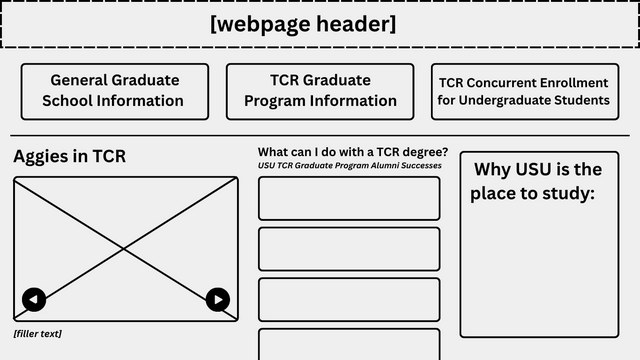
Once we’d built a prototype, we formulated questions and conducted user testing. In an effort to continue to gather feedback from the perspective of students who have not yet interacted with the TCR program at the graduate level, I prioritized my outreach focus into getting a test subject that was not personally invested in the program. I reasoned that this intentional inclusion would help us formulate a solution that served both those familiar and new to Utah State’s program.
One of my creative writing colleagues agreed to undergo our user testing, and I believe her feedback provided a valuable addition into how we corrected our prototype because she was able to highlight language that may be unfamiliar or feel cluttered to an outside user.
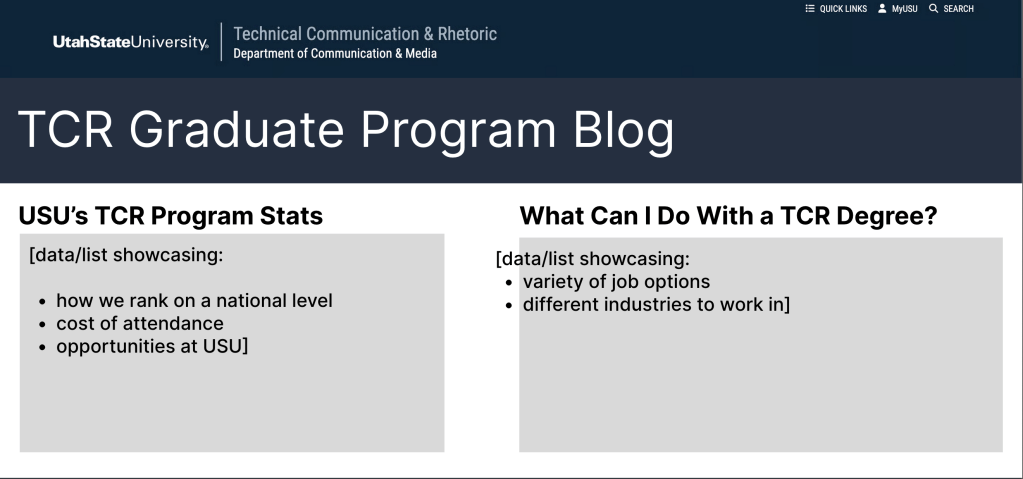
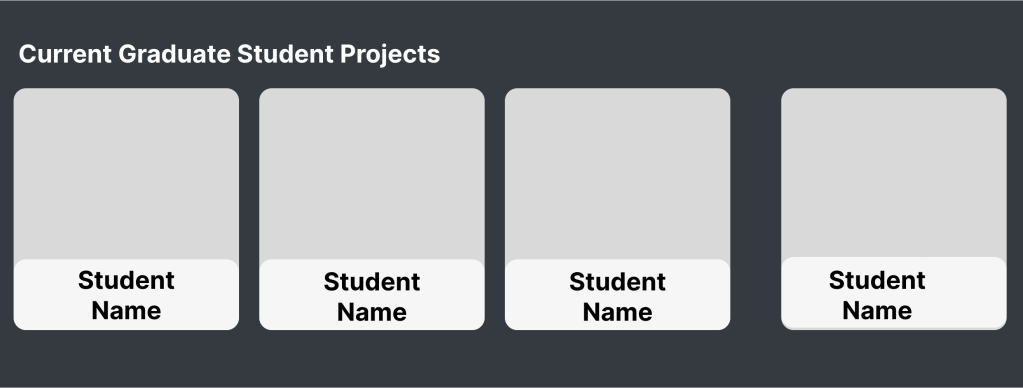
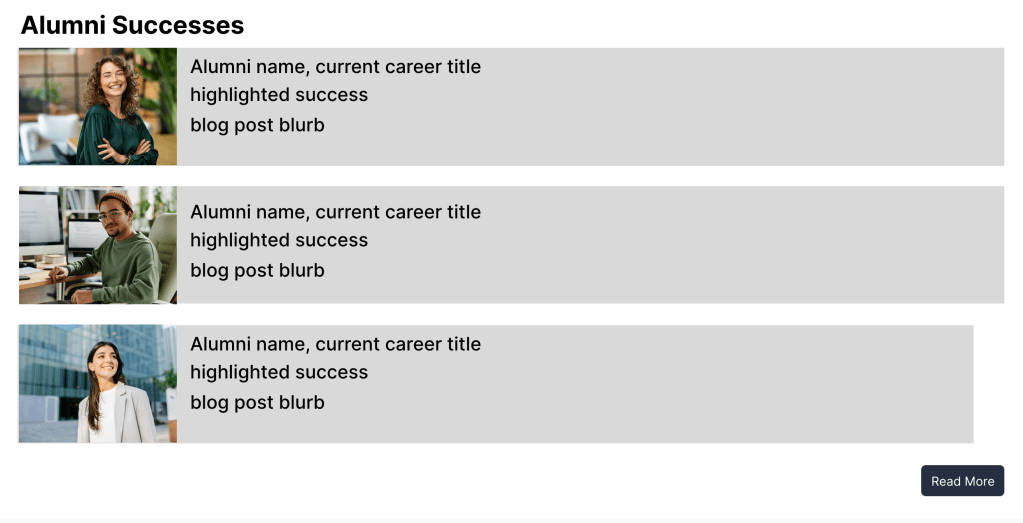
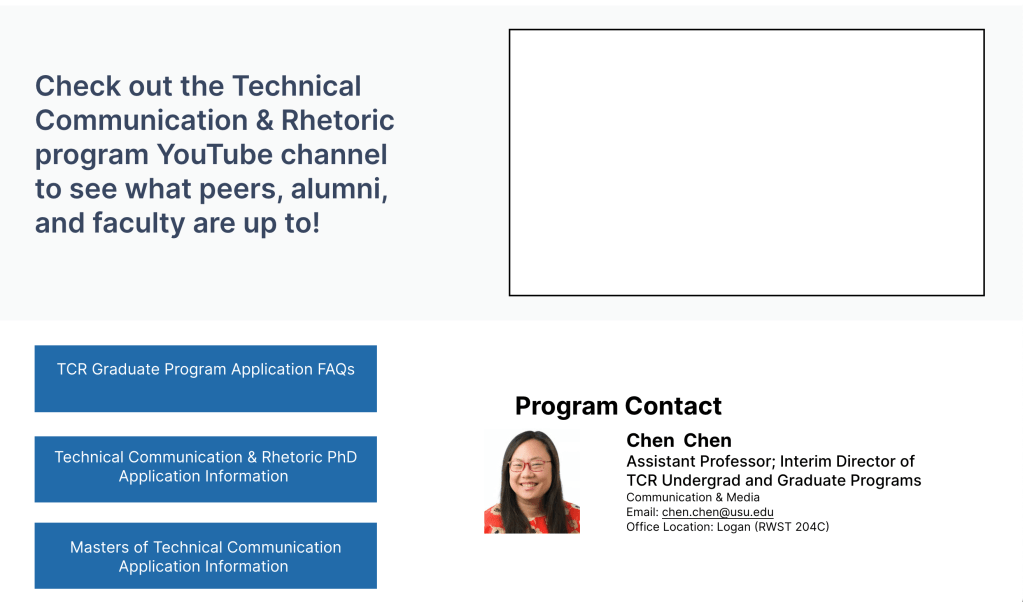
Combining her feedback with that we received from others, as well as from our instructor, we were able to adjust our crowded prototype into this draft below:
Conclusion
This project taught me about centering my writing around the user because it was the focal point of every decision we made at each step. The varying perspectives of my team helped us worked together to create a tool that will absolutely be useful for the future of the university as they consider how to better recruit students into the MTC and TCR graduate programs.
I love group projects because they often teach me how to consider my priorities in ways that serve the priorities of my team, and this was absolutely an example of that. It was a wonderful opportunity for me to be able to work with such capable individuals with diverse backgrounds and experience levels. While Lydia and Rhoda had a greater knowledge on the principles of UX design, I was able to bring outside considerations that would be useful to consider as the university works towards recruiting more members into its program under a wider umbrella of backgrounds.

